Showing posts with label Opening sequence research. Show all posts
Showing posts with label Opening sequence research. Show all posts
Sunday, 17 November 2013

Saturday, 16 November 2013
Motifs in opening sequences
Because opening sequences are conventionally used to set the tone and feel of a movie, it's common that film makers use a great deal of motifs to do so. A motif is a recurring structure that helps to communicate the main themes of a film, and it could have great symbolic significance. It could be anything - from a coin spinning in the air, to a car crash.


Example I hope to use for our opening: Two of the characters will comment on how it is about to rain, or how it isn't about to get any brighter, which denotes sadness. This is followed by the death of one of the characters in the scene. Rain and weather was used as a motif to communicate the theme of sadness.
Another one of my ideas/ examples: If you are doing a film which involves a main character destructively addicted to alcohol, you could have the opening shot of your film to be a close up of a glass of gin and tonic (with ice), with a sharp knife being used to stir the drink. This connotes that the character is fond of alcohol whilst denoting that it could have destructive consequences due to the sharp violent knife being used to stir the ice.
Famous examples of motifs used in opening sequences
James Bond: The gun barrel sequence:
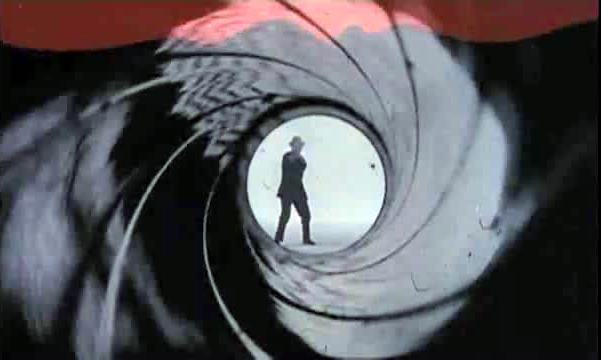
The gun barrel sequence has always been a prominent sequence in the James Bond series, more often than not appearing at the start of the film. James Chapman, a British media historian, has claimed that the sequence features "the trademark motif of the series", commenting that he believes that it "foregrounds the motif of looking, which is central to the spy genre."
Shot from the barrel of a gun we presume to be held by an assassin or foe, the sequence connotes that the character (Bond) is quick and dangerous, and will always be the fastest shot in a gunfight, even if the antagonist thought he had him in his sights. The blood denotes that the rest of the film will be violent, with deaths and injuries.
A Clockwork Orange: Sexual desire:

Indeed, when the opening close-up shot of A Clockwork Orange begins to zoom out, it is hardly a message of love and compassion that is communicated to the audience. The dystopian Britain seems to be based around the themes of dominant sex, 'ultra violence' and crime throughout the film, and the opening sequence does a great job of revealing this through the early motif of sexually repressed woman with the many mannequins posing provocatively in the nude, showing us that men are in charge and that woman are akin to tools of sexual pleasure in the new society - or that woman are viewed at in a way similar to the 'Whore' in Sigmund Freud's Madonna/Whore complex (which I believe to be nonsense, regardless)
Malignant opening sequence analysis
Malignant (With Jake Andrews)
Malignant: Definition - evil in nature or effect.
Mise-en-scene:
An industrial area with a ghost/ monster presence. The rustiness and roughness of the site creates a feel of isolation, creating tension as the audience wonders what could happen to the character, as well as why the area is abandoned
Presents the audience with four teenagers that stumble across the site, connoting a conflict which creates intrigue. This is also use of dramatic irony, as the audience already knows that there is a paranormal presence/ entity.
The area is encapsulated by a barbed wire fence, which emphasizes that you cannot escape from the site, and connotes that the fence may be keeping something within.
Camera:
Camera Panning: Shows the Keep out sign across to building. Shows the danger and remoteness of the area.
Point Of View Shot: Used when approaching the girl. Puts in you in perspective of the character making you feel more vulnerable creating tension and fear on the audience.
Sound:
Throughout the opening sequence there is a non diagetic eerie piano backing. This is conventional of horror films and creates an uncomfortable atmosphere with high pitched sharp violent sounds every so often.
When approaching the girl from a long-shot to a close up, the music quietens down before ultimately stopping. This builds tension as it creates a more exposed atmosphere for the audience, as they're no longer protected by the non-diegetic sound as the girl turns around, creating a climax of tension which had been building up from the start.
When approaching the girl from a long-shot to a close up, the music quietens down before ultimately stopping. This builds tension as it creates a more exposed atmosphere for the audience, as they're no longer protected by the non-diegetic sound as the girl turns around, creating a climax of tension which had been building up from the start.
Editing:
The animation of the opening credits is very difficult to visualize. However this could connote the paranormal sideof the film, as the credits are designed to look mysterious/ghostly. As ghosts are difficult to see and you never see a ghost clearly.
The paranormal theme is further emphasized by the mysterious figure popping up, creating tension as the audience wants to see what this thing is.
The paranormal theme is further emphasized by the mysterious figure popping up, creating tension as the audience wants to see what this thing is.
Horror/ narrative signifiers:Ghostly antagonist - conflict of film will probably be centred on this aspect
Walking through the woods
First victim in the first few minutes
Helpless teenagers - assumed to have to go up against the ghost later on in story
Mysterious music
Point of view shoAnimation/ font design of opening credits – ghostly
What is the strange paranormal presence?
Why is the area abandoned?
What happens to the first character?
What happens to the teenagers?
Why is there a paranormal presence?
Walking through the woods
First victim in the first few minutes
Helpless teenagers - assumed to have to go up against the ghost later on in story
Mysterious music
Point of view shoAnimation/ font design of opening credits – ghostly
Enigmas:
What is the strange paranormal presence?
Why is the area abandoned?
What happens to the first character?
What happens to the teenagers?
Why is there a paranormal presence?
These are all questions that the audience may be asking which drive them on to watch the rest of the film.
Thursday, 14 November 2013
Se7en/Seven opening title sequence
Seven is a film of the horror/thriller genre directed by David Fincher, following two detectives as they embark on an investigation to find a serial killer whose murders are based around the seven deadly sins. The opening title sequence features an obscure approach to narrative using uncannily eerie camera shots and editing whilst focusing on creepy body language - creating a suspenseful and intriguing opening title sequence.
Mise en scene:
The opening title sequence from Seven focuses around a character (presumably a man) psychotically fiddling with grimy instruments such as needles, razors and tweezers, frantically putting together photographs and notes, or scribbling nonsensical lines into a notebook. This crazed imagery shown throughout the whole opening title sequence connotes that the man we see is the murderer/ antagonist, without confirming whether this is true. This builds tension as the audience feels that they need to find out who's hands they have just seen.

Another notable thing about the mise en scene is the man's hands, or more specifically his fingers. His finger nails are encrusted with what looks like dirt or blood, with him eventually placing plasters over his fingers which further denotes that he has been doing 'dirty work', adding an eerie sense to the opening sequence.
The frenetic nature of the work that we see the man conducting and the way that he does it as well as the appearance that we are aware of (his hands), leads the audience to believe that this is probably the villain of the film - in line with Propp's character theory - as everything that we see in the scene hints towards a most likely dark and evil nature.
Camera
Most if not all shots are taken from a close up or extreme close up in Seven's opening title sequence. This is vital to have a continuous effect of building tension and suspense, as it's important that they don't give too much away to the audience about the character, place - or situation. It is a great technique to build tension because it leaves the audience guessing what the wider picture is, and continuing to watch through the film to find out.
Another affect that the close ups have on the audience is creating a feel of isolation and confinement with the unpleasant activity that the man is engaging in, making the opening sequence uneasy and tense.
Many of the shots are also at a dutch angle, which is a fantastic and widely used technique to disorientate the audience and create a disturbing feel for the film and show that something is wrong.

Audio
Though there doesn't seem to be any natural/ diegetic sound in the opening title sequence, Kyle Cooper makes excellent use of non-diegetic music over the top. A remixed version of Nine Inch Nails song "Closer", the song is made up of a harsh beating bass noise, sharp high pitched sounds and a strange static noise, which denotes the violent nature of the actions being taken, and denoting the harsh personality of the character in the scene. By having no diegetic sound, it leaves it to the audience's imagination, which might create a better affect than actually having the sound.
There are also many moments when the sharp parts of the track fit nicely onto the actions of the man. For example: When the man slides his finger across the paper to make sure that it sticks into place, the music plays a continuous airy hiss sound. This makes certain actions stick out, creating a scary atmosphere.
Editing
The titles that are shown are made up of sharp irregular fonts which feel violent and jagged - adding to the atmosphere of the scene. They flicker on the screen often suddenly and non-rhythmically - disorientating the audience and adding to the awareness that something is wrong.

The opening title sequence also uses a montage effect for shot transitions, switching from viewpoint to viewpoint quickly before the audience has the chance to establish what they are seeing properly. Again, this is disorientating and confusing to the audience. It also gives Seven the opportunity to show the various tools, equipment and terrifying resources to properly portray the character to be the villain of the film.
Genre signifiers
- The use of dark atmosphere created by low key lighting.
- A very dark and villainous character created by grimy and stained sharp props connoting cuts and injuries, connoting that the film will be focusing on darkness and violence.
- Sharp and jagged looking font to symbolize violent nature of film.
- Barbed audio, with sharp rises in pitch, similar and comparable even to the opening title sequence from classic horror films such as Psycho (1960).
Narrative enigma
One of the reasons why the sequence is so effective is due to the suspense and tension it created through narrative enigma. By not revealing the character but only his hands, it gives just enough detail of the crazed nature of this character that it encourages the audience to watch further to see what else he is capable of.
Another enigma that is manufactured by this opening title sequence is what exactly the man is planning or compiling, making the audience ask questions like "Why?", "Where?", "What?" - and leading them to be enticed into the mysterious narrative of the film.
Audience reception
This opening sequence is famed for the way that it establishes a tone for the rest of the film. Audiences would have enjoyed this opening sequence as it satisfies the need for entertainment as they might find it to be well-put together and aesthetically pleasing for the horror genre. They might also enjoy it as it increases intrigue towards the probable 'Villain' of the film.
Mise en scene:
The opening title sequence from Seven focuses around a character (presumably a man) psychotically fiddling with grimy instruments such as needles, razors and tweezers, frantically putting together photographs and notes, or scribbling nonsensical lines into a notebook. This crazed imagery shown throughout the whole opening title sequence connotes that the man we see is the murderer/ antagonist, without confirming whether this is true. This builds tension as the audience feels that they need to find out who's hands they have just seen.

Another notable thing about the mise en scene is the man's hands, or more specifically his fingers. His finger nails are encrusted with what looks like dirt or blood, with him eventually placing plasters over his fingers which further denotes that he has been doing 'dirty work', adding an eerie sense to the opening sequence.
The frenetic nature of the work that we see the man conducting and the way that he does it as well as the appearance that we are aware of (his hands), leads the audience to believe that this is probably the villain of the film - in line with Propp's character theory - as everything that we see in the scene hints towards a most likely dark and evil nature.
Camera
Most if not all shots are taken from a close up or extreme close up in Seven's opening title sequence. This is vital to have a continuous effect of building tension and suspense, as it's important that they don't give too much away to the audience about the character, place - or situation. It is a great technique to build tension because it leaves the audience guessing what the wider picture is, and continuing to watch through the film to find out.
Another affect that the close ups have on the audience is creating a feel of isolation and confinement with the unpleasant activity that the man is engaging in, making the opening sequence uneasy and tense.
Many of the shots are also at a dutch angle, which is a fantastic and widely used technique to disorientate the audience and create a disturbing feel for the film and show that something is wrong.

Audio
Though there doesn't seem to be any natural/ diegetic sound in the opening title sequence, Kyle Cooper makes excellent use of non-diegetic music over the top. A remixed version of Nine Inch Nails song "Closer", the song is made up of a harsh beating bass noise, sharp high pitched sounds and a strange static noise, which denotes the violent nature of the actions being taken, and denoting the harsh personality of the character in the scene. By having no diegetic sound, it leaves it to the audience's imagination, which might create a better affect than actually having the sound.
There are also many moments when the sharp parts of the track fit nicely onto the actions of the man. For example: When the man slides his finger across the paper to make sure that it sticks into place, the music plays a continuous airy hiss sound. This makes certain actions stick out, creating a scary atmosphere.
Editing
The titles that are shown are made up of sharp irregular fonts which feel violent and jagged - adding to the atmosphere of the scene. They flicker on the screen often suddenly and non-rhythmically - disorientating the audience and adding to the awareness that something is wrong.

The opening title sequence also uses a montage effect for shot transitions, switching from viewpoint to viewpoint quickly before the audience has the chance to establish what they are seeing properly. Again, this is disorientating and confusing to the audience. It also gives Seven the opportunity to show the various tools, equipment and terrifying resources to properly portray the character to be the villain of the film.
Genre signifiers
- The use of dark atmosphere created by low key lighting.
- A very dark and villainous character created by grimy and stained sharp props connoting cuts and injuries, connoting that the film will be focusing on darkness and violence.
- Sharp and jagged looking font to symbolize violent nature of film.
- Barbed audio, with sharp rises in pitch, similar and comparable even to the opening title sequence from classic horror films such as Psycho (1960).
Narrative enigma
One of the reasons why the sequence is so effective is due to the suspense and tension it created through narrative enigma. By not revealing the character but only his hands, it gives just enough detail of the crazed nature of this character that it encourages the audience to watch further to see what else he is capable of.
Another enigma that is manufactured by this opening title sequence is what exactly the man is planning or compiling, making the audience ask questions like "Why?", "Where?", "What?" - and leading them to be enticed into the mysterious narrative of the film.
Audience reception
This opening sequence is famed for the way that it establishes a tone for the rest of the film. Audiences would have enjoyed this opening sequence as it satisfies the need for entertainment as they might find it to be well-put together and aesthetically pleasing for the horror genre. They might also enjoy it as it increases intrigue towards the probable 'Villain' of the film.
Wednesday, 13 November 2013
No Country for Old Men opening sequence
Note: Video below does not include opening titles, they can be found at http://www.youtube.com/watch?v=kbW26Atp6eM
Subscribe to:
Posts (Atom)